“…aye, chance, free will, and necessity—no wise incompatible—all interweavingly working together.”
Moby-Dick, Chapter 47, “The Mat-Maker”
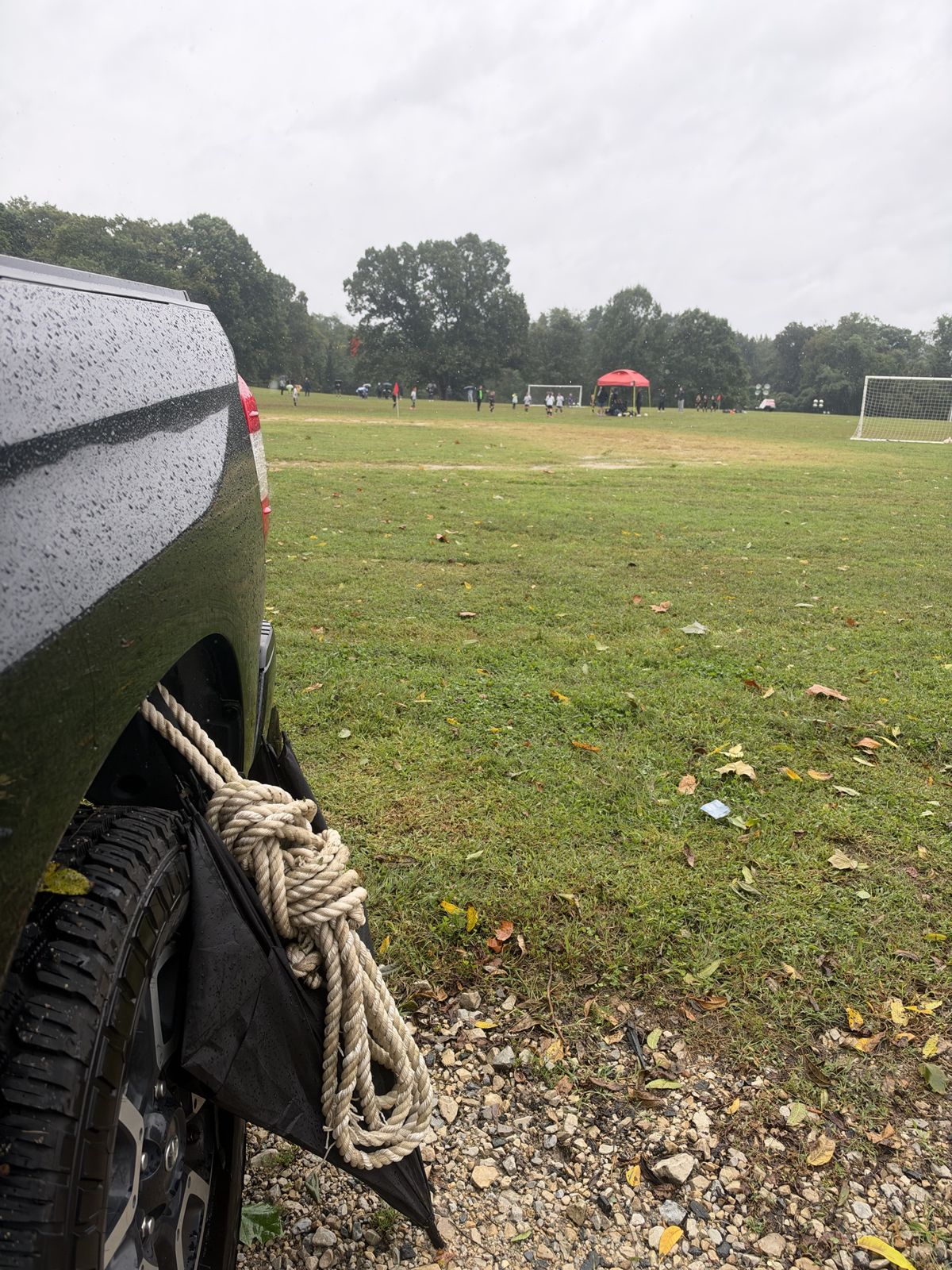
It was a raw, dripping Saturday, and I stood on the touchline with the other parents from my son’s team, strung out under our umbrellas like a watch mustered on a wet deck. Across the pitch the other side had a red canopy up, and their people huddled under it as a dory’s crew huddles under a tarpaulin to wait out a squall. The whistle went for the kickoff, and there in the wet grass at my feet lay a rope.
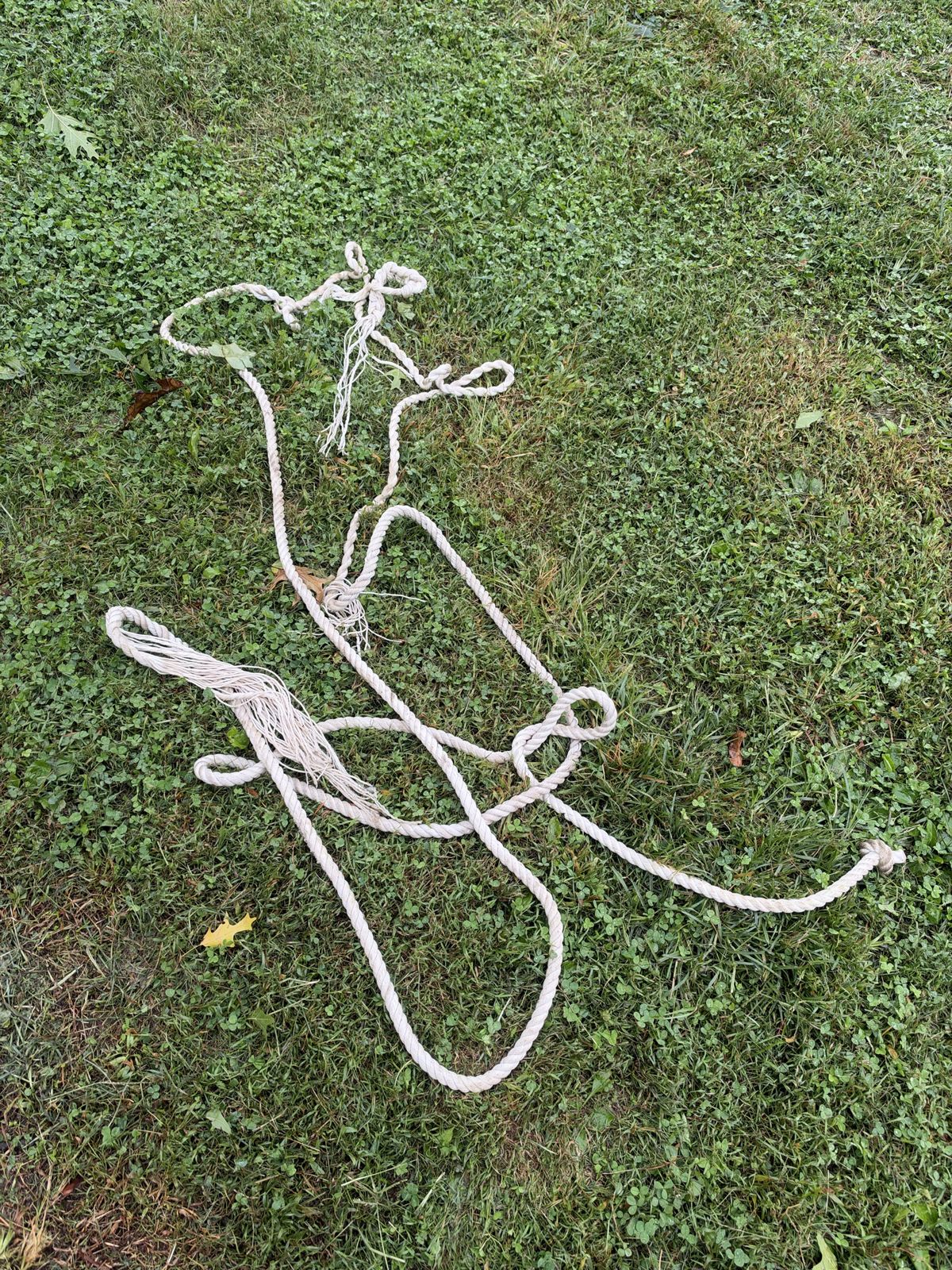
Three-strand, laid right-handed as nearly all honest rope is laid, and white as if it had come off the walk that week. Some landsman’s knife had taken to it with little care, and gone halfway through, and the rest had simply let go, so that the yarns fanned out from the wound in pale wet fringes like a drowned man’s hair. How a sailor’s line came to be on a school field so far from any salt is anybody’s guess. A younger me would have told you certainly, and been wrong. Left where it lay, the groundskeeper would have bagged it Monday with the leaves and the lost shin guards and the orange peels.
A rope, for whatever reason you might have to know one, is yarns spun right, gathered into strands twisted left, and those strands laid up right again, each turn bearing hard on the turn beneath, the whole of it fixed long before any hand of mine came near. Cut it and all that labor lets go at once, every part running back to its own grain as fast as it can.
So I picked it up. On their side of the pitch the coach ran his boys like a bosun at the capstan, every man to his bar, every heave on the whistle, round and round. Ours let them loose in the rain to find the ball as a dog finds a scent, and they went all over the field, sometimes at it and sometimes near it. I stood between the two with the wet mess in my hands and began, without much of my conscious deciding on the matter, to worry the loose yarns into turns of thread and the thread back toward the weave of the rope, over and under. Dreaminess settled on the sideline. The talk went on in threads all round me. Mortgages at seven percent. A book club where nobody reads the book, which grows every week regardless and may soon have to part in two like a cell, or like a congregation that has outgrown its meeting-house. Who shares a babysitter with whom. Can you even believe the new charter school. That one’s job has changed, that one has married again, that one’s kid is such a joy to be around. Each thread was spun tight in the telling and let go to drift off in the rain, and my hands kept at the rope, and my eyes kept on the ebb and flow on the field.
The other team advanced toward Wiley in goal like swell ahead of a nor’easter, and he sent the ball back to the middle like a sea wall, stolid and unbothered. Between rushes he swept the rain from his hair and kept up on his toes to stay warm, as a lookout stamps his feet at the masthead through the middle watch. Later they put him in the middle and he ran it hard. Then, reader, a collective jolt, his team scored off a perfect pass of his, and I cheered like a man sighting a spout off the lee bow. By the final whistle I had worked it well enough to coil, a loose coil, the strands married after a fashion, and not yet a line anyone could rely on or trust to hold a boat to the dock in a fresh breeze. I hung it from the mud flap and stood a minute in the rain admiring my work, then loaded up a sopping boy, a dripping dog, the line and the umbrella, and we were off to the park.
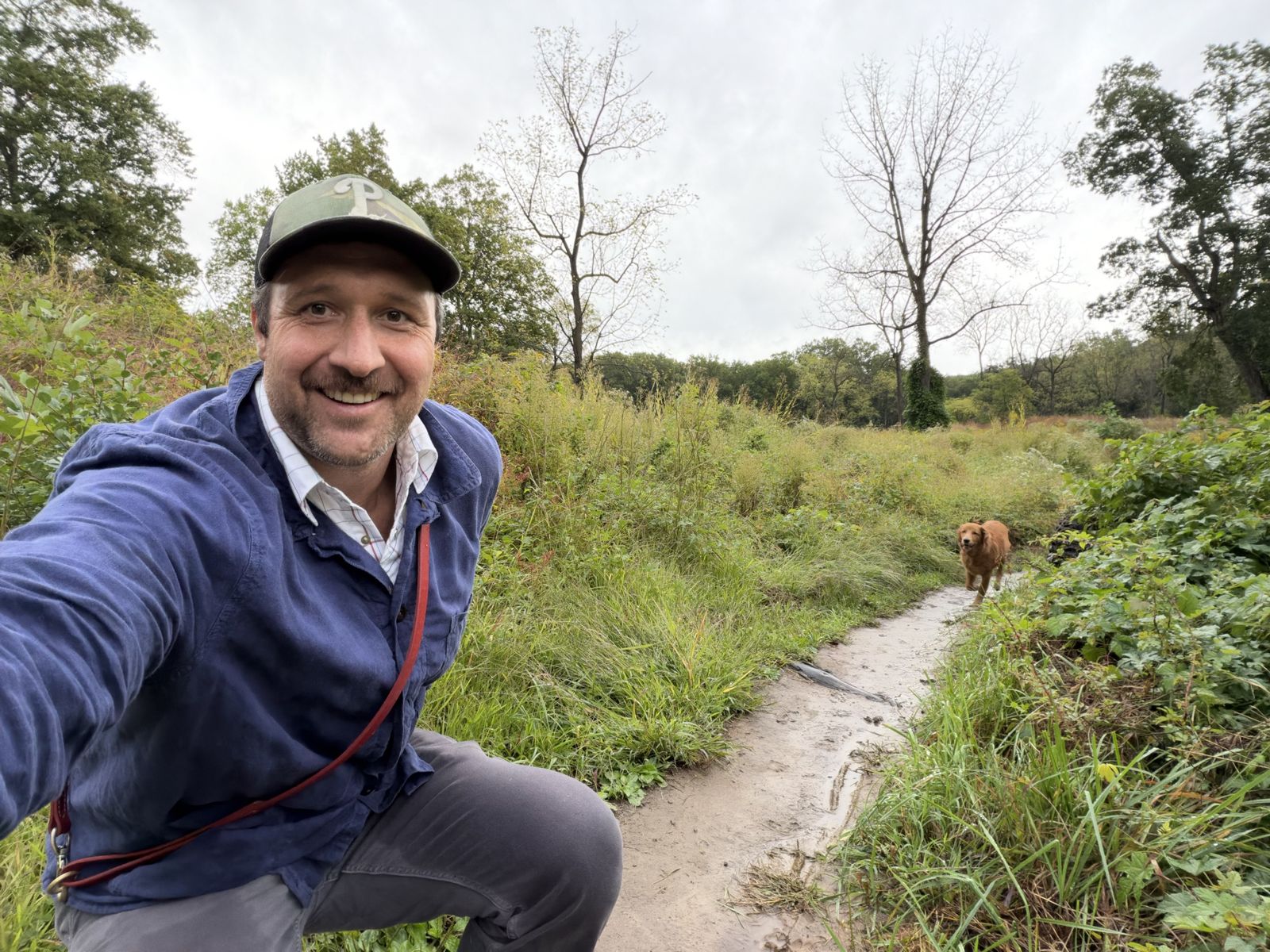
We walked Andorra Meadow. You’ve got to know which fork to take out there, which thread to pull. Jazz took the lead, nose down, and never once looked back to see if we were coming.
“Did you hear that? Song sparrow.”
“Can you make the sound it makes?”
Etta could, or near enough. Beep, beep, beep, beep.
I have been thinking of late about my own lay, the warp of it, laid up long before I came along and not to be swerved. There’s a man my mother calls Fa. There’s my grandfather, born in Charleston in the summer of 1915, and my grandmother, born that December into an Army family, the two of them married seventy-four years. There are Brown graves and Hertz graves in Charleston ground that I mean to stand beside next month, and a cousin there who sent the great spray of flowers to an Arlington grave she could not come to. There are the Halls, on my father’s mother’s side, reaching back to 1635 like an anchor rode sinking out of sight and connected unseen to something of meaningful gravity. And there’s the name I carry. A John Lippitt held a home lot in Providence by 1638, and five generations on there was a Moses they called the Mariner, whose son went south to Wilmington to sell dry goods, and his grandson mixed drugs on Market Street, and his great-grandson shipped cotton for Sprunt out of Bremen, and from there it came down through a surgeon in Savannah to my father and to me, the third William Henry, and to my boy in goal, the fourth. There is some Lippitt that wrote a Kierkegaard volume on the problem of self-love, that I have but haven’t read, which is apt.
A hawk came up out of the far trees, and the little birds went at him. He swung back and forth between the tops of two oaks like a lugger beating against a headwind, and they harried him on every tack. There was a birch at the edge of the meadow, a very big one, with the small birds cheep-cheeping all through it.
“One could do worse than be a swinger of birches,” I said. Nobody answered, which is the proper answer to Frost.
“There’s that barn swallow again.”
It might have been. I could’ve been wrong.
And there’s my mother’s brother Robert, the cadet. He had just finished plebe year and flew to Germany for a summer furlough with his family, and three days after landing the blow came down sideways on a road outside Mannheim, and he was dead at nineteen. They cut his name into the stone in 1958 and carved his parents’ names beside it then, with only the birth dates, and the stone stood there fifty-four years with those two names on it waiting before they came and lay down with him, the same afternoon, both caskets side by side over the one grave, a folded flag, the honor guard with their hands up in the heat. My mother has been writing it all down from memory, and some of it runs loose, which sons of Barbara’s are living and which are gone, who the cousin was in the sailboat where the two rivers meet at Charleston. Threads loosened, yarns escaped from their lay, as they do without a worrying of hands to twist that story back into the fabric of family before it is gone.
Jazz found a wet patch of meadow and threw herself down in it and rolled, all four feet in the air.
“That’s a good way to get ticks.”
“Oh, indeed.”
It was a nice loop, the birds, the kids, the muddy dog, the counterclockwise loop of the meadow that winds against the clockwise turn of the day.
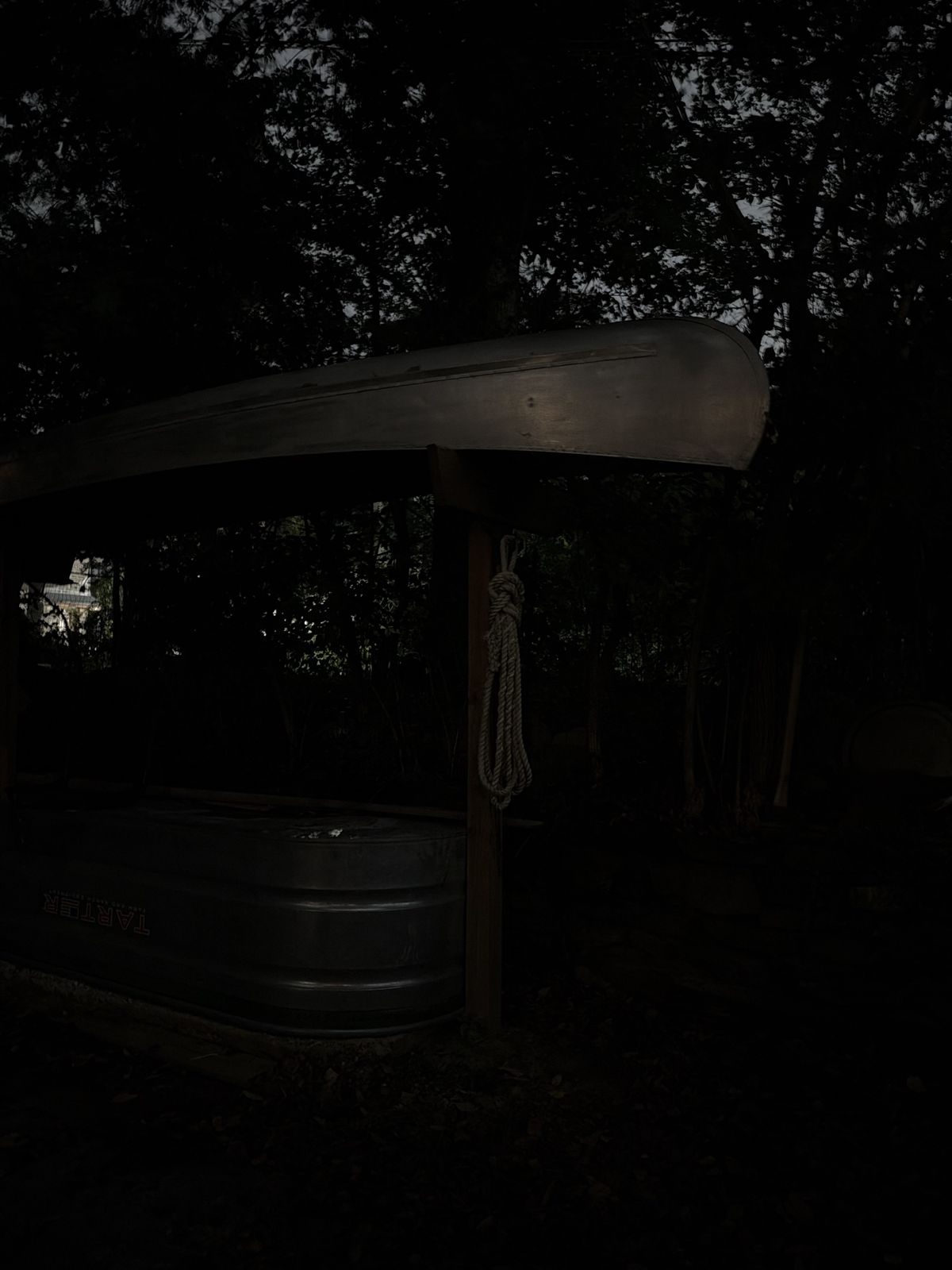
At home I took it up again under the canoe, which sits keel-up on its posts over the stock tank like a hull hauled out in dry dock, and I made the tank my bench: the rope, a knife, the little folding seat from the soccer sideline, the whole mess heaped wet and snarled on the galvanized lid. I came back to it on and off through the better part of the day, finishing what the sideline had started. I unlaid my rough work, teased the yarns out again and sorted them by strand, rolled each bunch between my palms the way it had once been spun, twisted the bunches into strands again, and then laid the three strands up against that twist, turn over turn, trying to do with two hands and a stubborn afternoon what the machine does in a minute without thinking. I backed it out and did it over, more than once. Then I worked the ends back up the rope against the lay, over one and under one, round and round, until they were fixed and snug and would not move. It went dark somewhere in there, and I finished by feel, the way you’d reef a sail at night with the boat heeled over and no light to see by.
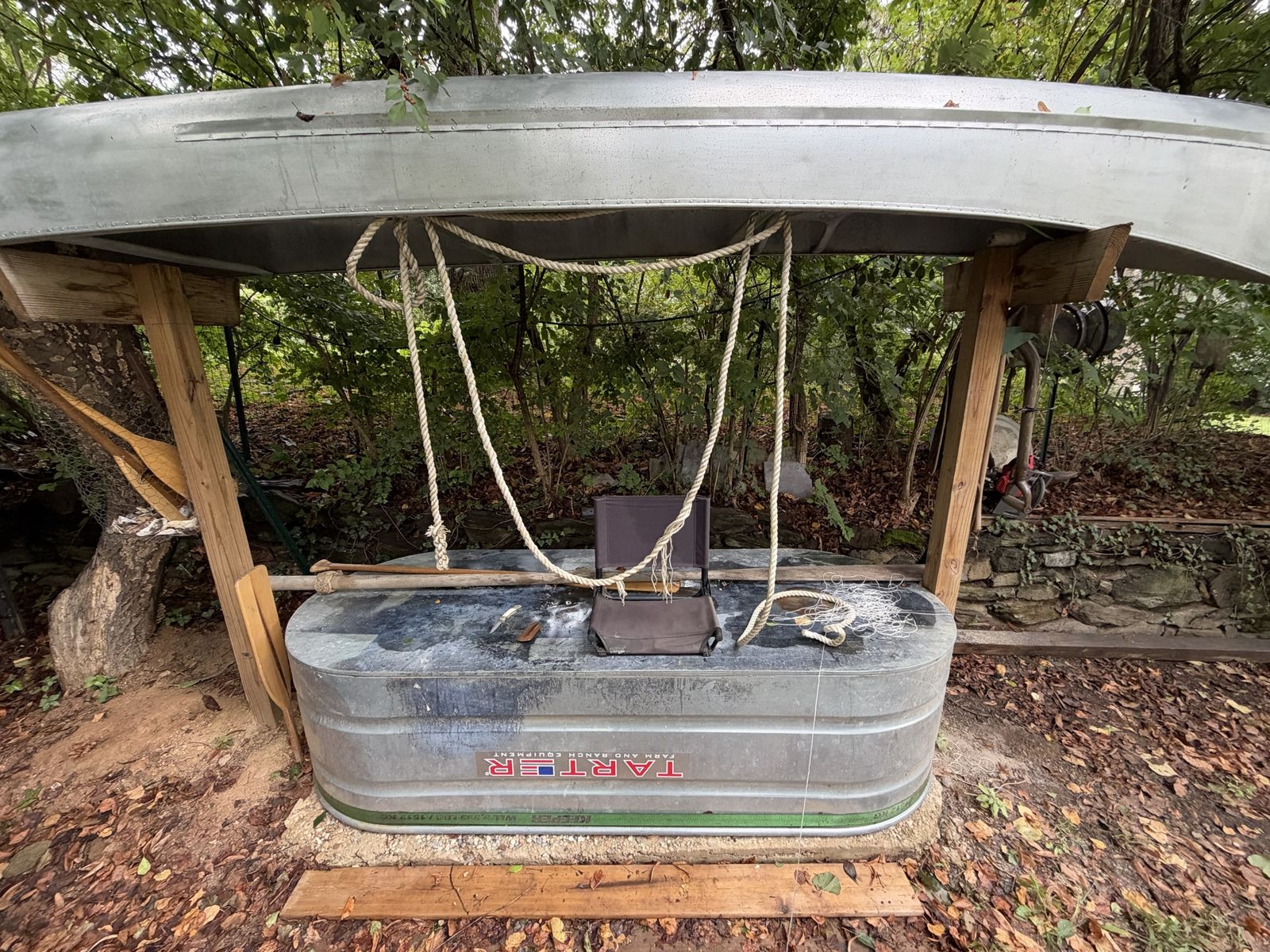
I’d lash the boat down with it in a storm tomorrow. For now it’s coiled and hung on the post under the canoe’s belly, back-spliced end down, the lay tight and even enough, and the next blow, whenever it comes, will find it there.