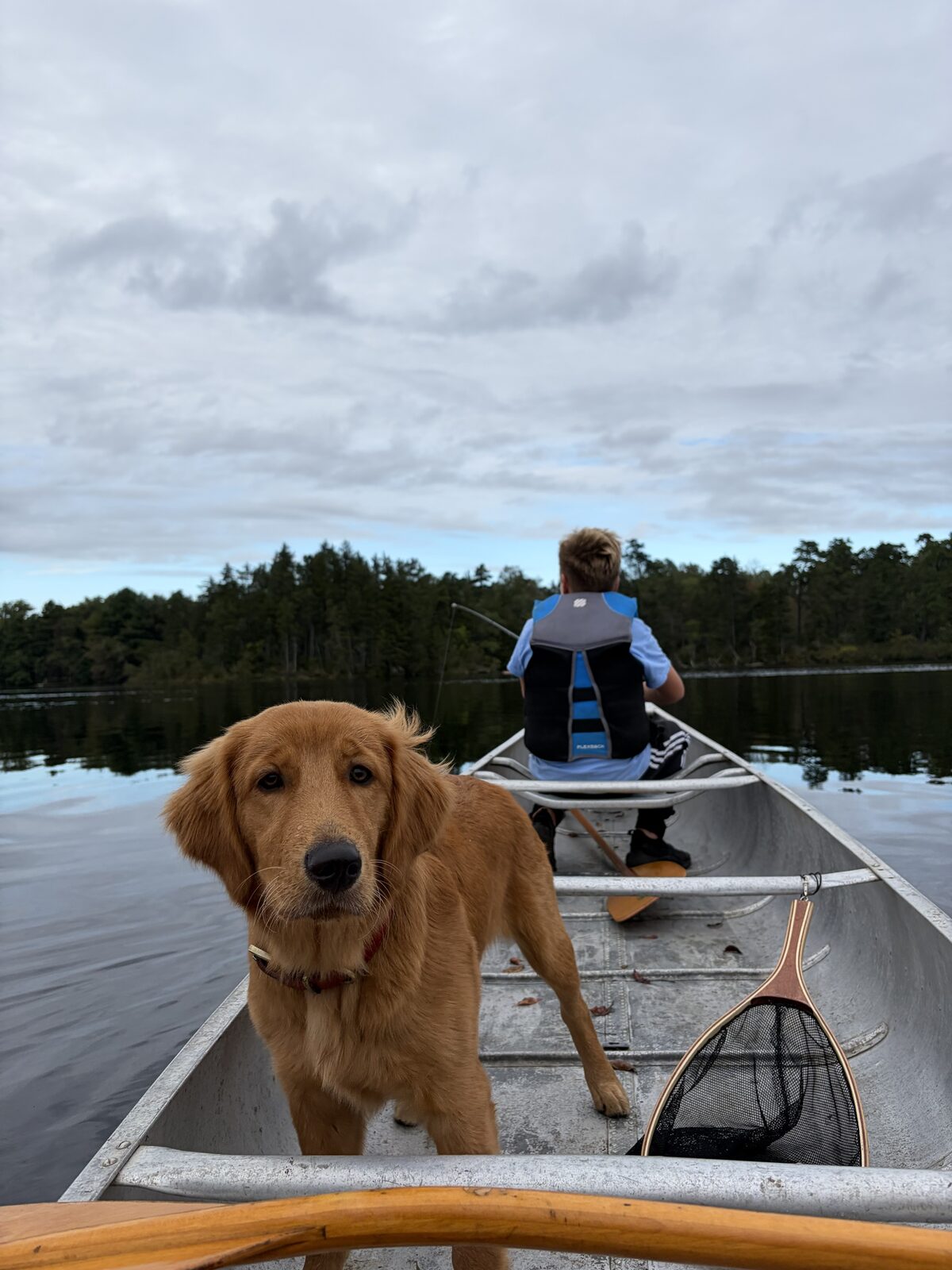
My son is learning to canoe, so we went down to Lake Atsion in the Pine Barrens and gave it two days. The first day we ran the Batsto, one of the “slow molasses-colored rivers with strange names” John McPhee wrote about fifty-some years ago, and the second day we chose the lake. The river may teach you about keeping up with the flow, keeping your paddle wet and your bow pointed downstream, while a lake leaves you more on your own, and the shores and boundaries you test are more of your own making, which is its own lesson for a boy. We spent the morning out on it and then drove off to find provisions for the evening’s meals. In the afternoon he learned his knots, and when he had them down we went back to the water.
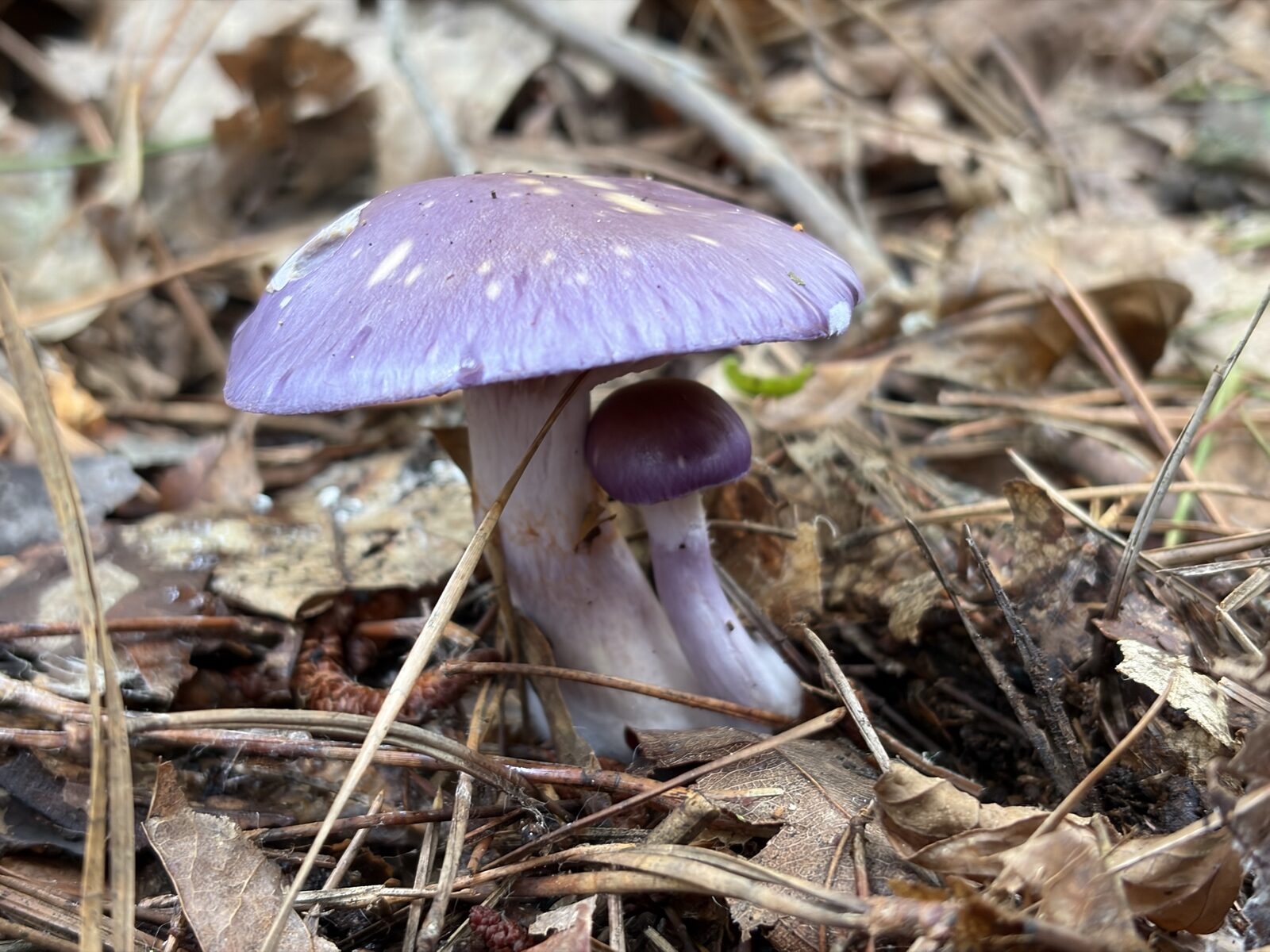
On the way down I found a purple mushroom standing in the pine needles with a small one coming up beneath it, close against the stem and under the shelter of the cap. It seemed about right. I brought the idea along with me to the canoe and turned it over for a while as we paddled, the big one and the little one and how near they stood, and what it is that keeps the little one under the cap, and what it will be that brings it out from there.
The fish weren’t biting. We put in on the far side, across from the campsites, left the canoe in a little cove, and went up into the pines to see what was there. He got out ahead of me, and somewhere in among the trees he lost track of where I was. He couldn’t have been far, but he panicked and started yelling for us. I whistled for Jazz, and he heard that and knew we were close, and it didn’t help much, because knowing we were close was not the same to him as seeing me. Something umbilical about it, a cord you don’t know is there until it pulls, and it pulls both ways, and after a minute we were back together and the woods were just woods again.
We walked easily, and took the path that called us, not heading anywhere in particular. It was a perfect pine grove, with the swamp off to our left. Jazz was biting at the bugs in a beam of sunlight when the mush gave way under her, and she came out all black, covered in stinky mud and dripping. We pulled her back over to the sandy beach to rinse off, and she slunk out of the rinse looking sheepish and went straight to rolling around in the dirt to dry. Knee high, a sticky mat of lowbush blueberry created a narrow path for us, and every now and then we passed under highbush blueberry six or ten feet tall. We found ourselves meandering along a narrow path, not paying particular attention, seeing where it went, choosing some turns on a vague sense of direction while we followed the dog and kept our eyes on the plants and on the sun casting longer shadows as the day wore into evening. The mosquitoes began to rise up out of the swamp as an early, still evening took hold, and we realized that from where we stood we could look right back across the cove to the canoe.
The river guide had told us the day before that the whole of the Pine Barrens has been documented as clear cut four times since the settlers came, for charcoal to feed one industry or another, or in one boom or another. The trees around us were the survivors of the most recent cut, or of the most recent wildfire to come scorching through, fifty years old I would guess, maybe seventy-five. The sandy soil will carry only a few species to any size, and the pines, once they are grown, make the ground more acid still, so that not much of any other kind of tree can live there. The ecosystem is diverse, but it is very specific. Blueberries and cranberries and swamp plants are plentiful, and sassafras, which might grow sixty or seventy feet tall in other soils, comes up in this bog-edge sand no more than four or six inches through.
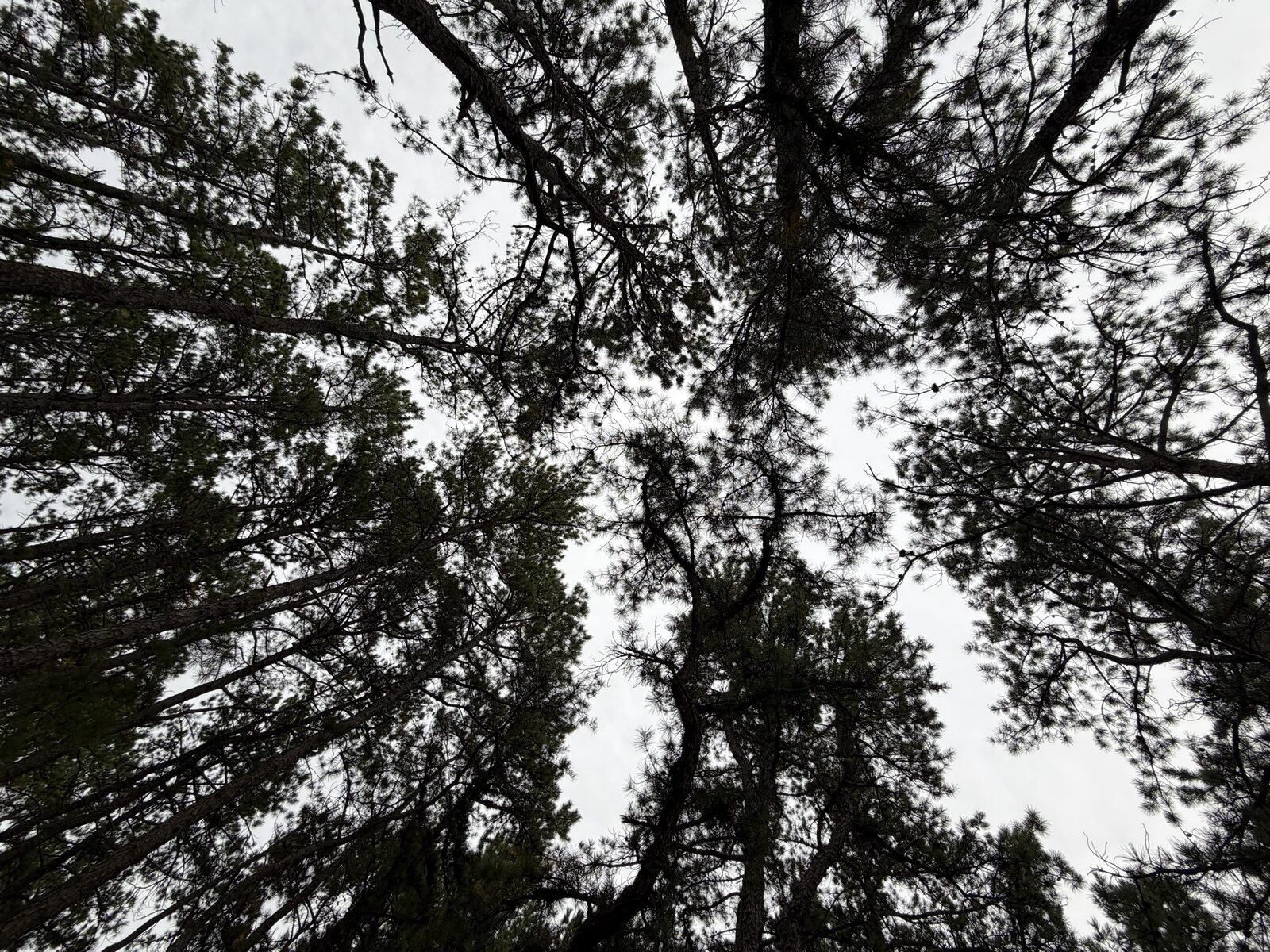
Look up in pines of the same age and they have a decidedly polite way about them, a restraint, each one giving its neighbors room on every side. A crown grows just to its own outer edge and stops short of the next, and a narrow strip of sky shows through between them. Nobody is quite sure how the trees know to stop. The best guess anybody has is the wind. Trees of a height sway together, and as they sway their outermost twigs brush and knock against the neighbor’s, and the tender buds at the tips get rubbed away, and after enough seasons of that a gap opens and holds. Some think the trees can also feel each other coming by the light, that a branch can tell from what is reflected off its neighbor’s needles that it is getting close, and slows. Either way it is worked out between them, without a word, how much sky each one is allotted, and they keep to it. Foresters call it crown shyness and have been writing about it for a hundred years.
I thought about the upland woods at home, the mixed eastern deciduous forest, where the haphazard overlapping canopy of oak and beech and tulip poplar has no such organization. Those trees fill every gap they can find, even if it means reaching in underneath a neighbor’s branch, and the woods close over thick and busy and lush until you couldn’t find a seam in the canopy if you went looking for one.
The order of a pure stand is easy to read and easy to admire, and I admired it, standing there. But it has a cost, and the cost is that so little else can come in. A different tree would have a hard time taking root in that sand under that shade, and even a different form of the same tree is rare. Nearly every pine goes straight up and holds its space and sways in the same breeze as the one beside it, and there is a kind of peace in that, and a kind of poverty too, and I could not have told you that afternoon which one I was feeling more.
A mixed wood is untidy, and its untidiness is its insurance. When the blight or the beetle comes for one kind there are other kinds to stand in the gap. The shade of one tree is the nursery of another, and what one takes out of the ground another puts back, and the whole thing goes on without any single member of it having to be right about everything. A place of one kind has to be right about everything. It can be beautiful for a long time that way, but it has made one bet. I suspect the same holds for a town, or a way of thinking, any arrangement where everyone has learned to reach for the same light, though I wouldn’t lean on the comparison too hard, and anyway I was mostly thinking about trees.
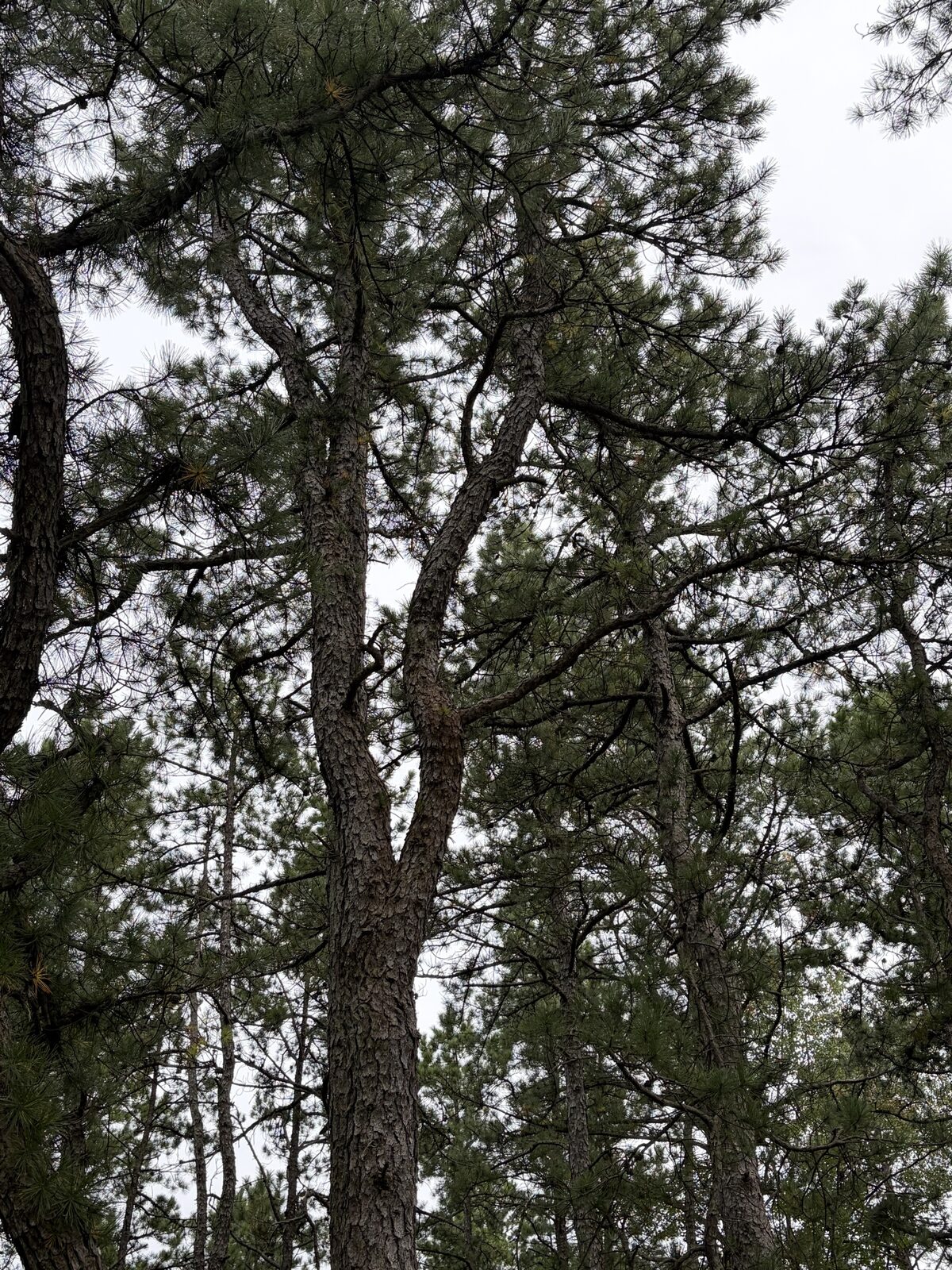
Which is why the one that forked stopped me. About fifteen feet up its trunk divides into a Y and sends up two leaders where every tree around it has one. You don’t see that often in a grove like this. Most of the time a fork like that means something took the top out of the tree when it was young, a storm or a weevil, and instead of quitting it answered with two. Both leaders have gone on up into the canopy and taken their places with the rest, swaying and nodding at their neighbors in a gentlemen’s agreement to share the light.
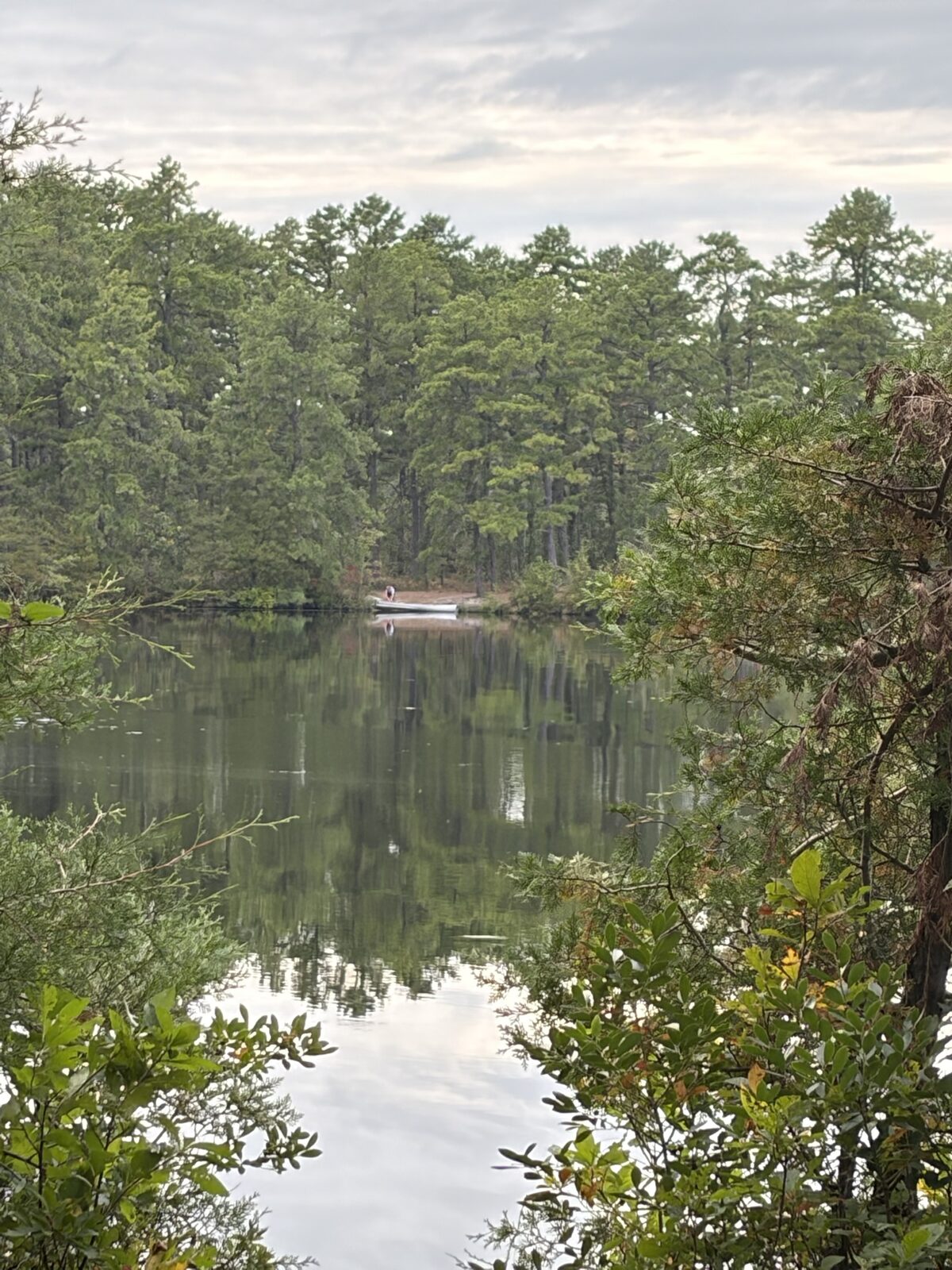
As we came around past this tree and stood marveling at it for a moment, we noticed across on the lee shore, if you can call it that, with the stillness of the evening settling in, our canoe. It was a good ways off, and we hadn’t realized we’d walked quite so far. My son was starting to get hungry and suggested we go back. I told him we could either swim back, or he could run around the shore, get the canoe, and come pick me up. He wavered. He asked if I would come, because he couldn’t remember the way there and didn’t want to get lost, and I told him he was on the swim team and could swim it if it came to that. After thinking on it a bit he asked no more questions and decided to go for it. He walked off and disappeared into the pines and the blueberries, and Jazz lay down at the edge of the water to watch for him, and I was glad to be alone a while in the sandy barrens with the dusk coming on.
It took him longer than I would have thought to get around to the other side, and I had time to wonder about it. Then there he was across the water, small against the trees, beside the canoe.
He’d had an adventure getting there, as he told it afterward. He saw the glint of cougar eyes back in the pines, and heard the call of the Yim Yammer, the Pineys’ giant that stands as tall as the pitch pines, and crossed the tracks of a few animals that would make dinner of a boy, and he kept going anyway. Whatever was out there, it was ample. A canoe trip like this is the safe edge of adventure, a searching branch with leaf tips seeking a light of their own. Wiley got his life jacket on and got in the way you’re supposed to, as if he had been at it all his life and not two days, and set off across the lake to come get me.